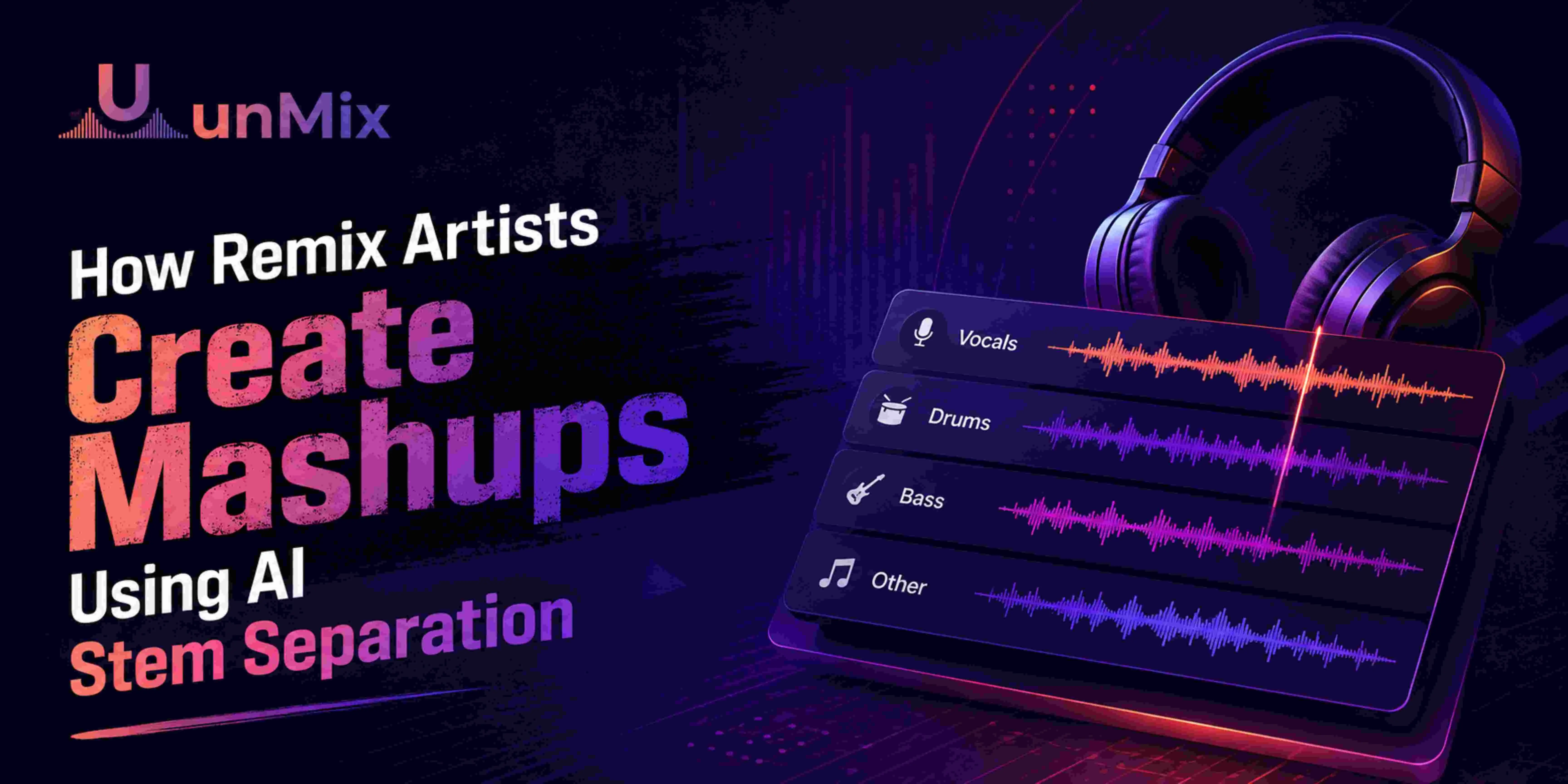
How Remix Artists Create Mashups Using AI Stem Separation
- 25 May 2026
- 12:33
There’s a reason some mashups sound surprisingly smooth while others feel chaotic within the first few seconds.
Usually, it comes down to control.
Not just creativity.
A good mashup artist isn’t throwing random songs together and hoping they magically fit. Most of the time, they’re carefully working with isolated parts of songs — vocals, drums, basslines, instrumentals — instead of full tracks.
That’s where AI stem separation has changed the process completely.
A few years ago, creating clean mashups often required:
- studio stems
- advanced editing software
- complicated extraction methods
- or hours of manual cleanup
Now creators can isolate tracks from existing songs in minutes.
And honestly, that’s one reason remix culture has exploded again across YouTube, TikTok, reels, and DJ content.
What Is AI Stem Separation?
AI stem separation works like a smart music separator that breaks a song into individual audio layers, commonly called “stems.”
Instead of one combined audio file, the song gets separated into parts like:
- vocals
- drums
- bass
- piano
- instrumentals
- other sound elements
This gives remix artists much more flexibility while editing.
For example:
- vocals from Song A
- instrumental from Song B
- drums from Song C
…can all be combined into one mashup.
That level of control used to be difficult unless official stems existed.
Now AI makes it accessible to almost anyone.
Why Remix Artists Prefer Stems Instead of Full Songs
Trying to mash up two full tracks usually creates problems fast.
Vocals overlap awkwardly.
Drums clash.
Melodies compete with each other.
And the mix starts sounding crowded.
Working with isolated stems changes that completely because creators can decide:
- what stays
- what gets muted
- what gets layered
- and what should lead the mix
That flexibility is what makes professional mashups sound intentional instead of messy.
How Remix Artists Create Mashups Using AI Stem Separation
The workflow today is much simpler than most people expect.
You don’t need to be an audio engineer anymore to experiment with mashups.
Start With Songs That Have Different Strengths
Most remix artists don’t choose songs randomly.
Usually they look for:
- strong vocals in one song
- powerful instrumental energy in another
- compatible tempos
- recognizable hooks
Sometimes songs from completely different genres surprisingly work together once separated into stems.
That’s part of the fun.
Upload the Songs Into unMix
Once the tracks are selected, upload them into unMix for stem separation.
The system analyzes the audio automatically and identifies different elements inside each song.
Depending on the track, this may include:
- lead vocals
- drums
- basslines
- instrumentals
- harmonies
- additional stems
After processing, creators can isolate the exact layers they want to use.
Choose Which Elements Actually Matter
This is where mashup creation becomes creative instead of technical.
Not every stem needs to stay.
A lot of remix artists remove:
- overlapping vocals
- extra percussion
- conflicting melodies
- background layers creating clutter
Sometimes a mashup becomes stronger because less is happening.
That’s something beginners usually learn after a few projects.
Match the Tempo Before Mixing
Even good stems can sound terrible if the tempo feels off.
That’s why creators usually adjust BPM before building the mashup.
A vocal that sounds awkward at first can suddenly feel perfectly natural once timing aligns properly.
This step matters more than many people realize.
Experiment With Layering
This is usually where the best mashups happen.
Creators test combinations like:
- isolated vocals over different instrumentals
- new drums under familiar melodies
- slowed vocals with energetic beats
- instrumental drops with alternate hooks
Most mashups don’t sound amazing immediately.
There’s usually experimentation involved.
Sometimes the unexpected combinations work best.
Listen for Space, Not Just Energy
One mistake beginners make is trying to keep too many stems active at once.
Everything becomes loud.
Nothing stands out.
Good mashups usually leave room for certain elements to breathe.
That might mean:
- muting drums temporarily
- lowering instrument layers
- removing backing vocals
- simplifying transitions
Professional-sounding mashups often feel cleaner, not busier.
Why AI Stem Separation Changed Remix Culture
Before AI separation became common, remix artists relied heavily on leaked stems, unofficial acapellas, or basic vocal remover tools that often damaged the audio quality.
Results were inconsistent.
A lot of mashups sounded distorted or hollow because older separation methods damaged the audio too much.
AI changed that.
Instead of aggressively cutting frequencies, modern systems isolate actual audio components separately.
That usually produces:
- cleaner vocals
- stronger instrumentals
- less distortion
- better layering flexibility
For remix artists, that difference is massive.
Real Ways Creators Use Stem Separation
Mashups are only part of the picture now.
Stem separation workflows appear everywhere in creator culture.
YouTube Mashups
Probably the most obvious use case.
Creators often use AI stem separation almost like a music remover, isolating vocals and instrumentals to create completely new song combinations.
DJ Transitions
Many DJs use isolated stems to build smoother live transitions between tracks.
Reel and TikTok Edits
Short-form creators often use isolated vocals for cinematic edits and transitions.
Remix Challenges
Artists frequently experiment with stems during remix competitions and social content trends.
One Thing Most New Remix Artists Get Wrong
They focus too much on technical perfection.
Honestly, mashups usually work because of feeling, not because every stem is perfectly clean.
Some of the most popular remixes online still contain:
- tiny imperfections
- rough transitions
- unexpected overlaps
But the energy works.
That matters more than sterile editing.
Tips for Better Mashups
A few habits make the process much easier.
Use Songs With Similar Energy
Even different genres can work if the emotional energy feels compatible.
Don’t Overcrowd the Mix
More stems does not automatically mean better mashups.
Preview With Headphones
Small conflicts between vocals and instrumentals become easier to hear.
Experiment More Than You Plan
A lot of great mashups happen accidentally while testing combinations.
Keep Recognizable Moments
People connect faster when at least one familiar element remains strong.
Why Mashups Feel More Creative Now
AI stem separation removed a huge technical barrier.
Creators no longer spend hours just trying to isolate usable vocals.
Now they spend more time experimenting creatively instead.
That’s a much healthier workflow for artists.
And honestly, it’s one reason remix content feels more active again across social platforms.
More people can participate.
More people can experiment.
More people can create.
Can AI Stem Separation Replace Official Stems?
Not entirely.
Official studio stems are still cleaner when available.
But AI separation is now good enough that many creators use it for:
- social content
- remix experiments
- mashups
- DJ edits
- practice projects
- creative exploration
For most online content, the quality is already more than usable.
Final Thoughts
Mashups have always been about hearing possibilities inside existing music.
AI stem separation simply makes those possibilities easier to explore.
Instead of being limited by full songs, creators can now work with individual layers and reshape tracks in ways that used to require professional production tools.
That doesn’t replace creativity.
If anything, it gives creators more room to use it.
And honestly, that’s probably why remix culture feels so alive right now.